Yacht charter FAQ for Split, Croatia
Booking, licences, check-in, deposits, marina logistics and route planning
This FAQ hub brings together the practical questions guests most often ask before a yacht charter from Split, Croatia. It covers booking basics, charter length, pricing structure, bareboat licence requirements, skipper options, check-in, marina logistics, route planning, and the smaller operational details that make a sailing week run smoothly. The aim is simple: keep ABA VELA’s yacht pages focused on the yacht itself while one central page answers the recurring process questions that apply across the fleet.
Use this page if you are deciding between bareboat charter in Croatia and skippered yacht charter in Croatia, checking whether your certificate matches the list on the valid licences page, comparing yacht-dependent charges on the yacht charter prices page, comparing a private crewed yacht charter from Split, checking the seasonal trade-offs on the best time to sail from Split, or working out how a one-week departure from the Split charter guide usually fits together. The answers stay practical and evergreen: where something varies by yacht, season, or confirmation documents, the FAQ points that out clearly and directs you to the most useful page or to contact ABA VELA for a booking-specific answer.
What this FAQ page covers
Booking basics & charter length | Prices, payments & what is included | Base package, deposit & insurance | Licences, VHF & bareboat rules
Documents, crew changes & local paperwork | Check-in, early boarding & first day logistics | Check-out, return-to-base & support during the week | Marina Split, parking, transfers & provisioning
Skipper, hostess & onboard services | Routes, islands & one-way planning | Best season, weather & practical packing | Onboard life, safety & family travel
Start with the right charter type
If your crew already has the right documents and wants full control of the route, start with bareboat charter in Croatia. If you want local route knowledge, easier marina handling, or a more relaxed week for the whole group, compare skippered yacht charter in Croatia. Before committing to bareboat, double-check your paperwork on the valid licences page and compare yacht-dependent charges on the yacht charter prices page.
Search live availability, open the yacht page, review the specification and any extras, then send the booking or enquiry with your dates and crew details.
If you want a faster overview first, start with the sailing yacht fleet and narrow the shortlist from there.
Weekly Saturday-to-Saturday charters are still the standard, but shorter bookings can sometimes be arranged in low or mid-season or close to departure if the yacht calendar allows it.
Yes, but only when availability and base logistics allow it. Short charters are usually easier to arrange outside peak summer weeks, so ask ABA VELA directly before you plan flights around a non-standard turnover.
It can be possible on selected dates, but it is not the default weekly charter format. For a short trip from Split, ask for the exact yacht and dates first so the team can confirm what is operationally realistic.
A bareboat charter means your crew provides the qualified skipper and handles the yacht independently. A crewed or skippered charter adds professional sailing support, which is often the better fit for relaxed holidays or mixed-experience crews; compare bareboat charter in Croatia with skippered yacht charter in Croatia.
Cancellation requests should be handled directly with the booking team as soon as possible, because the available options depend on the confirmed booking terms and timing of the request.
No booking should be treated as freely changeable after confirmation. Period changes and cancellations depend on the charter terms, the notice period, and whether the yacht can be rebooked, so review the confirmation and contact ABA VELA promptly if plans change.
The charter price usually covers use of the yacht for the agreed period together with the standard onboard equipment listed on that specific boat page. Extras, turnaround services, fuel, skipper, and other operational costs are shown separately where applicable.
The yacht charter fee normally includes the yacht itself, standard equipment, safety gear, and the agreed charter period from the base. Costs that vary by booking, such as skipper service, optional extras, fuel, provisioning, tourist taxes, and some turnaround items, are usually listed separately.
The real cost depends on yacht type, size, season, age, demand, and any crew or extras you add. For an accurate comparison, use the yacht charter prices page, the sailing yacht fleet, the catamaran fleet from Split, and special offers instead of relying on generic averages.
Online bookings usually support major payment cards, and direct bank transfer is commonly available as well. If your company or crew needs a different payment method, confirm it with ABA VELA before the invoice deadline.
Yes, the displayed charter prices are generally shown inclusive of VAT unless a page or quote clearly states otherwise.
This is usually possible at the base office, but payment handling can vary by service and timing. If card payment for extras is important for your crew, confirm it before arrival.
Croatia uses the euro (EUR).
Pricing normally reflects yacht size, model, age, season, demand, and any added services such as skipper, hostess, or equipment. Peak summer weeks cost more, while shoulder-season departures often give better choice and better value; see the yacht charter prices page for the main cost drivers.
A bareboat charter gives you the yacht and the standard equipment assigned to that particular boat, while operational items such as the base package, optional extras, and any crew services are handled separately. Use the specific yacht page and booking confirmation as the final reference.
The base package usually covers the standard turnaround items needed for handover, such as cleaning and the normal onboard setup, but the exact contents can vary by yacht and booking. Check the yacht page or confirmation rather than assuming the same list for every boat.
A security deposit is the refundable amount held against chargeable damage, loss, or non-standard return issues during the charter. The amount varies by yacht and is shown in the booking details, and it is normally released after check-out if no deductions apply.
Yes, charter yachts are normally covered by standard hull and liability insurance, but that does not remove the charterer’s responsibility up to the agreed deposit or excess. Always read the booking terms for the exact scope, exclusions, and deductible rules.
This is usually an optional non-refundable payment that reduces the charterer’s exposure compared with the full refundable security deposit. The exact conditions, limits, and exclusions can vary by yacht, so use the booking offer as the final reference.
Croatia requires a skipper certificate accepted in Croatia and, in practice, the relevant radio qualification for bareboat operation. Check the valid licences page before you book or travel.
You need the right documents for a bareboat charter. If your crew does not have them, a skippered yacht charter in Croatia is the practical alternative.
Yes, by hiring a professional skipper. That option lets your crew sail without presenting bareboat qualifications and is often the easiest choice for first-time Croatia charters; see skippered yacht charter in Croatia.
Not always. Some certificates cover more than one vessel type, but you should verify your exact document against the current Croatia licence list before arrival.
Yes, recreational fishing in Croatia generally requires the appropriate permit. The rule is separate from the yacht charter itself, so arrange the fishing licence if your crew plans to fish.
Yes, if the nominated skipper holds documents that Croatia accepts and the charter company confirms them. That is the standard bareboat charter in Croatia option.
Yes. A professional skipper can be added subject to availability, which is especially useful for relaxed holidays, mixed-experience crews, or guests who want local route knowledge; see skippered yacht charter in Croatia.
Planning a Split yacht charter step by step
A practical Split plan usually starts with dates, crew size, and the decision between bareboat and skippered sailing. After that, shortlist the right yacht, confirm certificate validity, check the pricing breakdown, and only then lock in flights and transfers. If you want the wider base context before choosing the boat, start with the Split charter guide.
Once the charter type is clear, compare the operating costs on the yacht charter prices page, verify skipper documents on the valid licences page, and then shape the week around realistic daily legs using the weekly routes guide. If you are considering a directional trip rather than a round trip, use the one-way routes guide before you assume a one-way arrangement is available for your dates.
Crew changes can be possible, but they must be cleared with the charter company so the official crew list can be updated correctly. Do not swap guests informally without notifying the base.
Bring the booking or boarding documents, passports or IDs for the crew, and the skipper’s licence and radio certificate for bareboat charters. Your confirmation may also list payment or deposit requirements, so use that as the final check-in checklist.
Only if the route, yacht paperwork, insurance terms, and destination-country formalities allow it. If your plan includes leaving Croatian waters, confirm that with ABA VELA before the charter is finalised.
Tourist tax is a standard local charge connected to stays in Croatia. The amount and collection method can change, so follow the current booking or base instructions rather than relying on older examples.
Transit log is an older charter term that many companies now fold into the broader base package or turnaround services. Use the wording shown in the current offer and confirmation.
Weekly charters normally follow a Saturday handover with return to base before the final disembarkation morning, but the exact timing is always defined by your booking confirmation. Use the confirmed schedule rather than generic assumptions.
Embarkation and disembarkation happen within the handover windows shown in the booking documents. Plan flights and transfers with some margin, because yacht preparation, inspection, and marina traffic can affect the exact rhythm of the day.
Only if an early check-in has been agreed and the yacht is ready. Without that confirmation, the standard turnover window still applies.
No. The yacht should be used only after the formal handover is complete and the base team confirms that check-in has been finished.
Only when ABA VELA confirms an early handover for that specific yacht and date. Otherwise the standard timetable remains in force.
Do not assume that the base offers a formal luggage room. If you arrive early and baggage handling matters, ask in advance what is possible on that day.
Late arrival can usually be coordinated if the paperwork and handover process are prepared correctly in advance. The yacht can only be used once the formal takeover has been completed, so tell the base team your arrival plan as early as possible.
Return the yacht within the window stated in the booking documents, usually with enough time for refuelling, inspection, and the final base procedure before disembarkation.
Use the confirmed return slot and leave margin for weather, fuel queues, and approach time back to Split. The final leg should not be planned too tightly.
The charter contract is still with the charterer, so any damage case is handled through the charter booking first. Liability between charterer, skipper, and insurers depends on what happened, which is why every incident should be reported to ABA VELA immediately.
If there is immediate danger to life or vessel, use the official emergency channels first, such as 112 or VHF channel 16, and then inform ABA VELA support as soon as you can. For non-life-threatening technical or operational issues, contact the charter support line directly.
Contact ABA VELA support immediately, share your location and a clear description of the issue, and follow the instructions you receive. Do not attempt risky repairs or route changes on your own unless the support team tells you to do so.
Yes, unless your booking specifically includes a different arrangement. If refuelling support is important because of queues or timing, ask the base in advance what options are available for your return.
Often yes in larger marinas, restaurants, and shops, but it is still wise to carry some cash for smaller ports, buoys, taxis, and places with limited card acceptance.
Base-berth arrangements depend on the charter booking and marina operations. If you plan to come back to the home marina during the week or stay there outside the normal turnover pattern, confirm the practical details with ABA VELA first.
Parking is generally available around ACI Marina Split, but availability, pricing, and reservation rules can change. For the current situation, use the Split charter guide or confirm directly with ABA VELA shortly before arrival.
That depends on the weather, your crew’s comfort level, and the route you are sailing. Marinas and ports offer shelter and services, while bays can be quieter and more scenic but require sound anchoring or buoy decisions and extra attention to the forecast.
Berth prices vary widely with boat length, marina category, season, and whether you are using a marina, town quay, or buoy field. Check the current local tariffs for the places on your route instead of relying on a single generic number.
Transfer help from Split Airport to the base can often be arranged on request. If you need that service, ask early so the team can confirm the current options for your group size and arrival time.
Provisioning before arrival is often possible, but the exact process can change between suppliers and seasons. If you want the boat stocked in advance, arrange it before check-in or ask ABA VELA for the current provisioning option.
You can usually buy groceries either in or near the marina area, and larger supermarkets are available in Split as well. Your best option depends on arrival time, whether you want to shop personally, and whether you arrange provisioning in advance.
How to choose between bareboat, skippered yacht, and catamaran
Choose bareboat when your skipper already meets the Croatian requirements and your crew wants to handle the route independently. Choose a skipper when you want local knowledge, easier docking, or a more relaxed first charter without giving up the sailing experience. The difference is explained clearly on bareboat charter in Croatia and skippered yacht charter in Croatia.
For yacht choice, a monohull usually makes sense for crews who want the classic sailing feel and a wider budget range, while a catamaran suits crews who care more about deck width, cabin separation, and liveaboard comfort. To compare both styles from the same base, browse the sailing yacht fleet for monohulls and the catamaran fleet from Split for catamarans.
Yes, extra onboard crew such as hostess or chef can usually be arranged on request, subject to availability and the yacht layout you choose.
No, skipper service is usually charged separately from the bareboat charter fee unless a specific offer states otherwise.
English is the standard working language for charter skippers, and other language requests may sometimes be matched as well. If your crew needs a specific language, ask before confirmation.
The skipper needs a proper berth, which is why crew capacity should be planned with the skipper included. On some layouts that means a dedicated cabin, while on others the saloon berth may be the agreed solution.
Yes, crews usually provide food for the skipper during the charter or agree on a meal arrangement in advance.
Bed linen and related turnover items are usually specified in the base package or on the yacht details page. Check the exact booking details for your chosen boat rather than assuming the same setup for every charter.
A dinghy is commonly included, while an outboard engine may be yacht-specific or treated as an extra on some boats. Always use the individual yacht page as the equipment reference.
Many ABA VELA yachts list onboard Wi-Fi, but the exact setup is boat-specific. Confirm it on the individual yacht page or in the extras and equipment list for your booking.
A one-way charter can be possible on selected routes, but it needs operational confirmation because the home base is in Split and the logistics are route-specific. Start with the one-way routes guide and then confirm the exact plan through ABA VELA contact.
A classic one-week route from Split often includes Brač, Hvar, Vis, and Šolta, but the best final version depends on the weather, the yacht, and how relaxed or active your crew wants the week to be. Start with the 7-day route from Split or the weekly routes guide.
The most popular itineraries are island-hopping routes through Central Dalmatia, especially from Split toward Brač, Hvar, Vis, the Pakleni islands, and sometimes Korčula on longer or faster-paced weeks. The weekly routes guide is the best starting point.
Split is the most practical starting point for many crews because it offers strong flight access and direct reach to the central Dalmatian islands. Dubrovnik is more route-specific and often works best for southern itineraries or one-way plans; compare the Split charter guide with one-way route planning.
Seven days is the classic balance for island hopping from Split because it gives enough time for several islands without turning the trip into a constant rush. Shorter charters need tighter routing, while longer charters open up more relaxed or more ambitious itineraries.
Pack light layers, personal documents, non-marking shoes, sun protection, swim gear, chargers, and any medication your crew needs. On a boat, simple packing works best because storage space is limited.
Soft bags are much easier to store on a yacht than hard suitcases, which is why they are the standard recommendation for a one-week charter.
Bring clothes for sun and wind, toiletries, medication, boat-friendly shoes, and one warmer layer for evenings or weather changes. You can buy most food and everyday supplies near the base or along the route, so there is no need to overpack.
That depends on whether you prioritise warm water, lively islands, easier prices, or quieter marinas. For many crews, late spring and early autumn give the best overall balance; the Split charter guide helps frame the trade-offs.
As a broad guide, the Adriatic is cooler in spring, warmest in mid-summer, and still comfortable in early autumn. Typical ranges are about 15 to 18 C in April and May, 22 to 27 C in June through August, and around 20 to 25 C in September and October.
Croatia’s sailing season follows a Mediterranean pattern, with hot and mostly dry summers and milder shoulder seasons that are often very pleasant for sailing. Conditions still vary week to week, so always plan around the live forecast close to departure.
May, June, September, and early October are often the strongest all-round months because they combine good sailing conditions with lower crowd pressure than peak summer. July and August remain the liveliest months, but they also bring the highest demand.
Safety equipment is usually carried according to the yacht’s registered berth count and legal requirements, not only the number of guests currently on board.
Most charter yachts provide basic charging options, but the exact outlet mix can differ between models. Bring the chargers or adapters you normally use on boats and confirm any special power needs on the yacht page if they matter to your crew.
Smoking is generally treated as an outside-only activity and should never put sails, cushions, lines, or the interior at risk. Follow the base rules for your specific yacht and avoid smoking inside cabins or the saloon.
Yes, families sail regularly from Split. If you are travelling with children, ask in advance about practical extras such as a safety net so the yacht can be prepared for your crew profile.
Pets are often possible by prior agreement, but the rules and any extra cleaning conditions should be confirmed before arrival. If you plan to bring a pet, tell ABA VELA during the booking process rather than after confirmation.
Age alone does not determine charter quality. Maintenance history, regular servicing, equipment care, and current presentation matter much more, which is why the latest yacht page, photos, and reviews are the best indicators for the boat you are considering.
Popular yacht options from Split
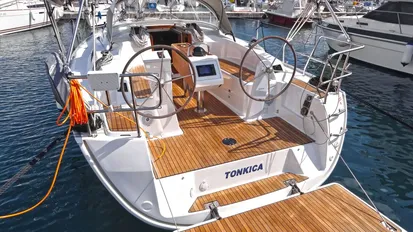
Different FAQ answers point different crews toward different boats. These three examples cover a smaller bareboat-friendly monohull, a larger group monohull, and a comfort-led modern monohull from the same Split base.
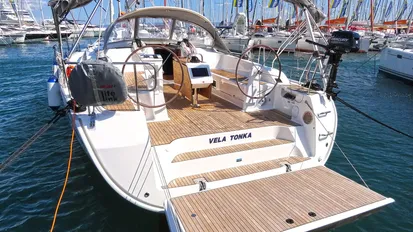
| Year: | 2018 | |
| Cabins: | 5 | |
| Berths: | 10+2 | |
| Toilets: | 3 |
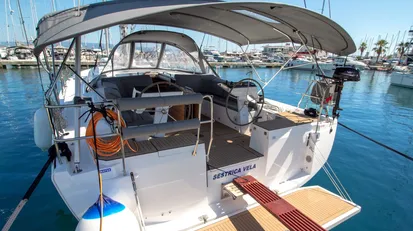
| Year: | 2025 | |
| Cabins: | 3 | |
| Berths: | 8+1 | |
| Toilets: | 2+1 |