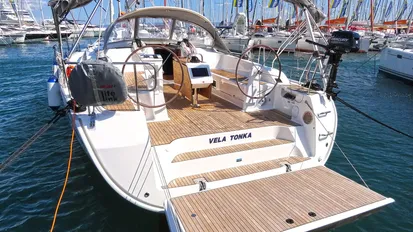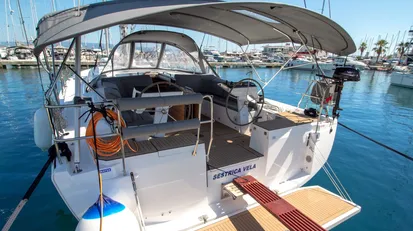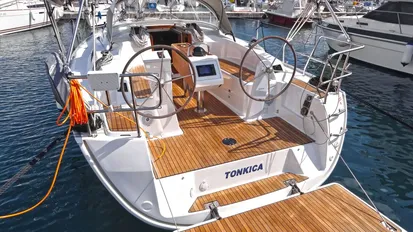
Practical guide on how to buy a yacht in Croatia
Buying an ex charter yacht in Croatia is a popular way to step into yacht ownership or a charter boat investment. But a yacht sold from a charter fleet is usually a business asset, so the transaction has to be structured around VAT status, EU goods status, and whether the yacht stays in the EU or is exported outside the EU. If you are comparing boats currently leaving charter service, review the live sailboats page and the Yacht Charter Split guide before you start drafting the SPA.
Chapter 1
Why buying a charter yacht in Croatia is different
Croatia is one of Europe's strongest charter markets, with large fleets operating from Split, Trogir, Kastela, Sibenik, and Zadar. When a yacht is sold out of a charter fleet, the transaction normally comes with structured documentation, service history, and a clearer operating record than a casual private sale.
Commercial maintenance cycles
Charter boats are maintained against season deadlines, turnover checks, and refit plans that are easier to audit later.
VAT as a business question
The yacht is often a business asset, so invoice wording, buyer status, and VAT treatment matter from the first draft of the SPA.
Better handover records
Inventory lists, engine hours, refit notes, and service logs should all move with the yacht at handover.
Management can continue
Many buyers keep the yacht in charter management after purchase, which keeps Croatia relevant for the ongoing tax and operating model.
Textbook takeaway
"Buy charter yacht Croatia" is not only a purchase question. It is also a VAT and compliance question.
Chapter 2
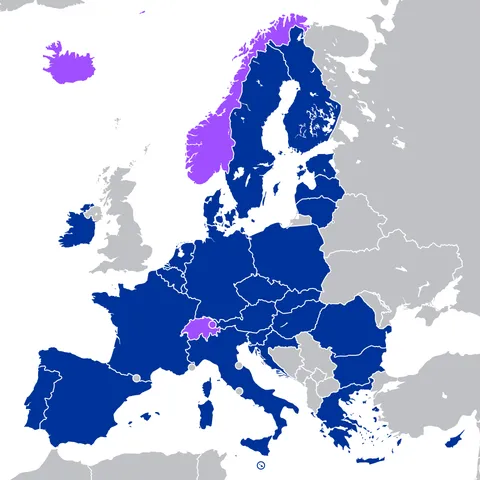
Flow A: EU -> EU while the yacht remains in the EU
This is the most common scenario for EU buyers purchasing a sailing yacht from a charter fleet or a catamaran for sale in Croatia , then registering it under another EU flag while the yacht remains based in Croatia. In this case, no customs export procedure is required .
How to read this flow
Think of Flow A as a registry and VAT-verification exercise inside the EU framework. If the paperwork is correct, the yacht usually keeps its EU goods status.
Step-by-step procedure (EU -> EU)
- Sale and Purchase Agreement (SPA) with clear VAT wording, delivery terms, and a clean handover definition.
- VAT checkpoint to confirm EU VAT-paid status and the correct invoice structure.
- Deletion from the Croatian registry through the Harbour Master, producing the deletion certificate known as the brisovnica.
- Registration under a new EU flag and issuance of the new Certificate of Registry.
- Insurance and authority updates including any power of attorney if someone else moves the yacht.
- Local operating compliance if the yacht will stay in Croatia for charter use.
VAT checkpoint: what to verify
1) EU VAT-paid status
Ask for evidence that the yacht is EU VAT-paid: original purchase invoice, VAT documentation, and supporting records. If the trail is clean, an EU-to-EU flag change should not disturb the yacht's EU goods status.
Risk: missing documents can complicate checks, financing, and future resale.
2) B2B versus B2C outcome
An EU VAT-registered company may be able to structure the sale as an intra-community supply. A private buyer usually faces Croatian VAT when buying from a VAT-registered seller.
Risk: applying 0% VAT without meeting the legal conditions can unwind the tax position later.
Practical charter example
A German company buys a 2020 sailing yacht from a Split-based charter fleet and keeps it in the same marina under a charter management agreement.
- Document the handover with an inventory list, engine hours, refit report, and service history.
- Define who invoices charter guests and where VAT is accounted for.
- Do not assume that a foreign EU flag automatically means no Croatian VAT for charter operations.
Common mistake
Buyers often confuse a flag change with VAT neutrality. If the yacht is still commercially operated from Croatia, the operating model still matters.
Chapter 3
Flow B: EU -> non-EU export outside the EU
This applies to buyers from non-EU jurisdictions, such as the UK, Turkey, or Switzerland, and to anyone who plans to move the yacht out of the EU customs territory. In this scenario, yacht export from Croatia procedures are mandatory.
Step-by-step procedure (EU -> non-EU)
- Sale and Purchase Agreement (SPA) with export wording, delivery terms, and a clear handover description.
- Deletion from the Croatian registry and collection of the brisovnica.
- Export customs declaration through a broker or forwarder, resulting in an MRN .
- Physical exit from EU waters because the export must happen in reality, not only on paper.
- Exit confirmation as proof that the export was completed.
- Registration under the non-EU flag once the customs process is complete.
VAT checkpoint: export must be real
A sale to a non-EU buyer may qualify as a 0% VAT export only with strict proof: MRN plus confirmed physical exit from EU territory. Export on paper while the yacht remains in Croatia is a high-risk pattern.
Practical charter example
A UK resident buys a Lagoon catamaran from a Croatian charter company at the end of the season and plans to cruise Turkey under the UK flag.
- Plan the route and timing so the yacht genuinely exits EU waters.
- Use a competent customs broker to issue the MRN and support the declaration.
- Keep a complete VAT dossier: SPA, brisovnica, MRN, exit confirmation, and delivery evidence.
What if the yacht comes back later?
After export, the yacht usually loses EU goods status. If it later re-enters the EU, import VAT may apply. This is often missed by owners planning seasonal cruising around the Mediterranean.
Temporary admission: specialist territory
Some owners export a yacht and later re-enter under temporary admission. Commercial use under temporary admission is sensitive and can invalidate VAT relief, so this is not a do-it-yourself area.
Chapter 4
Key VAT differences: Flow A versus Flow B
Flow A stays inside the EU framework
The main challenge is proving VAT status and updating the registry correctly while the yacht continues operating lawfully.
Flow B depends on export evidence
Without MRN and confirmed exit, the hoped-for export VAT treatment can collapse and Croatian VAT may be assessed retroactively.
| Topic | Flow A (EU -> EU) | Flow B (EU -> non-EU) |
|---|---|---|
| Export customs declaration (MRN) | No | Yes |
| 0% VAT because of export | No, because this is not an export | Yes, but only if the export is fully proven |
| EU goods status after sale | Usually retained | Usually lost |
| Import VAT risk if the yacht later returns | Lower | Higher |
| Typical buyer intention | Keep the yacht in Croatia and possibly continue charter management | Move the yacht to non-EU cruising grounds or non-EU ownership |
Chapter 5
Benefits of buying from a small family-owned charter company
Large fleets dominate many yacht for sale Croatia searches, but buying an ex charter yacht in Croatia from a smaller family-owned company can offer practical advantages, especially if you want the yacht based in Croatia with ongoing charter management .
Transparent maintenance history
You are more likely to speak directly with the people who oversaw the yacht day to day instead of receiving only a sales summary.
Consistent technical oversight
Smaller fleets often mean fewer boats per technician and stronger quality control over refits, replacements, and servicing.
Cleaner handover
Condition reporting, inventory accuracy, and replacement records tend to be easier to review when the same team handled the boat across seasons.
Smoother transition
A close-knit operator can often help with registry steps, practical delivery, and the first round of post-sale decisions.
Why continuity matters
When the same people who cared for the yacht remain involved after the sale, the handover is usually calmer: fewer surprises, clearer records, and faster problem-solving.
Final note
Disclaimer
This article is general information for 2026 and not legal or tax advice. VAT outcomes depend on buyer status, documentation, delivery facts, operating model, and export evidence. Before closing any transaction, confirm the exact VAT treatment with a qualified tax adviser and, where needed, a customs broker.